Reparations Now & Pan-African Solidarity
25th Anniversary
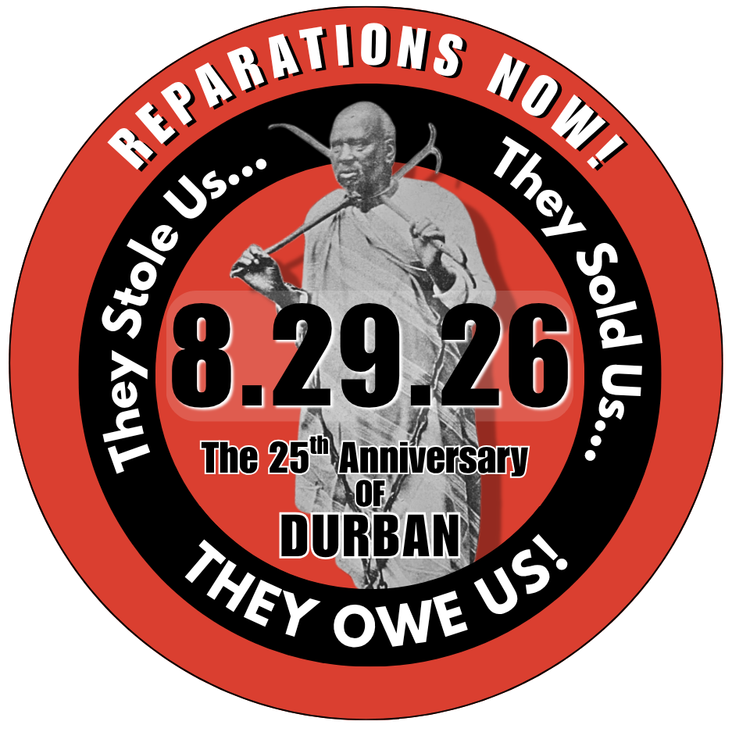
2026 — 25 Years Since Durban
2026 is an important year in our international struggle for reparations. It marks the 25th anniversary of the UN World Conference Against Racism in Durban, South Africa, which produced the Durban Declaration and Programme of Action (DDPA). It was on March 25th of this year that the DDPA was advanced through the enactment of UN Resolution A/80/L.48, entitled Declaration of the Trafficking of Enslaved Africans and Racialized Chattel Enslavement of Africans as the Gravest Crime Against Humanity.
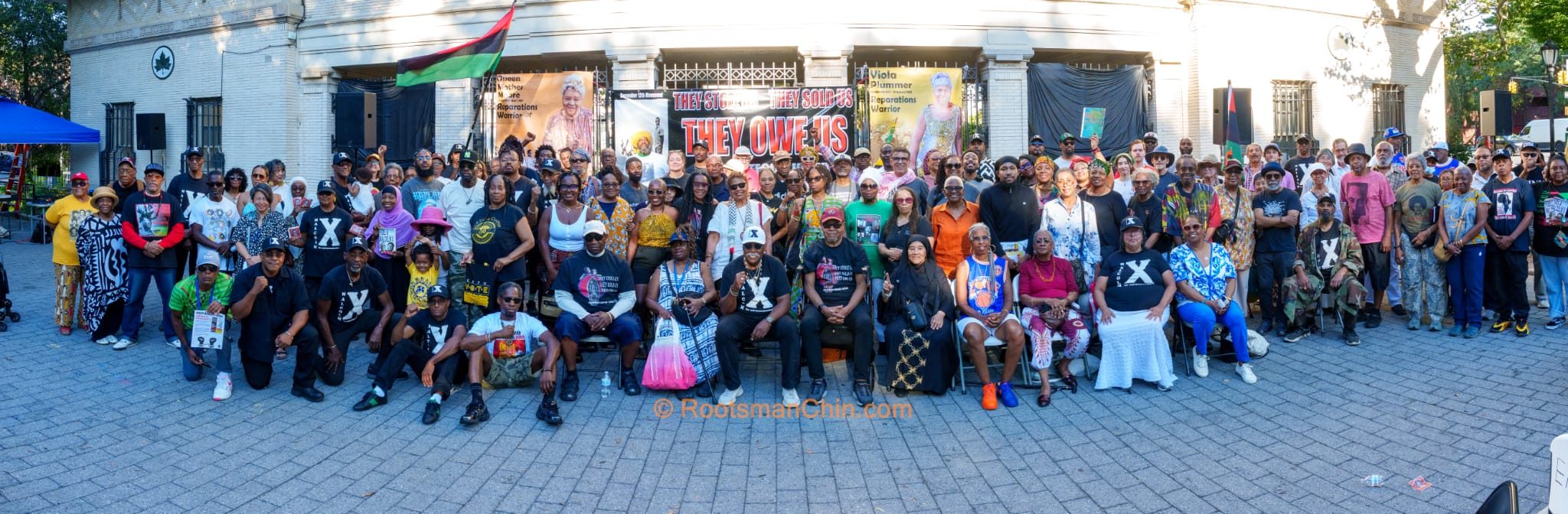
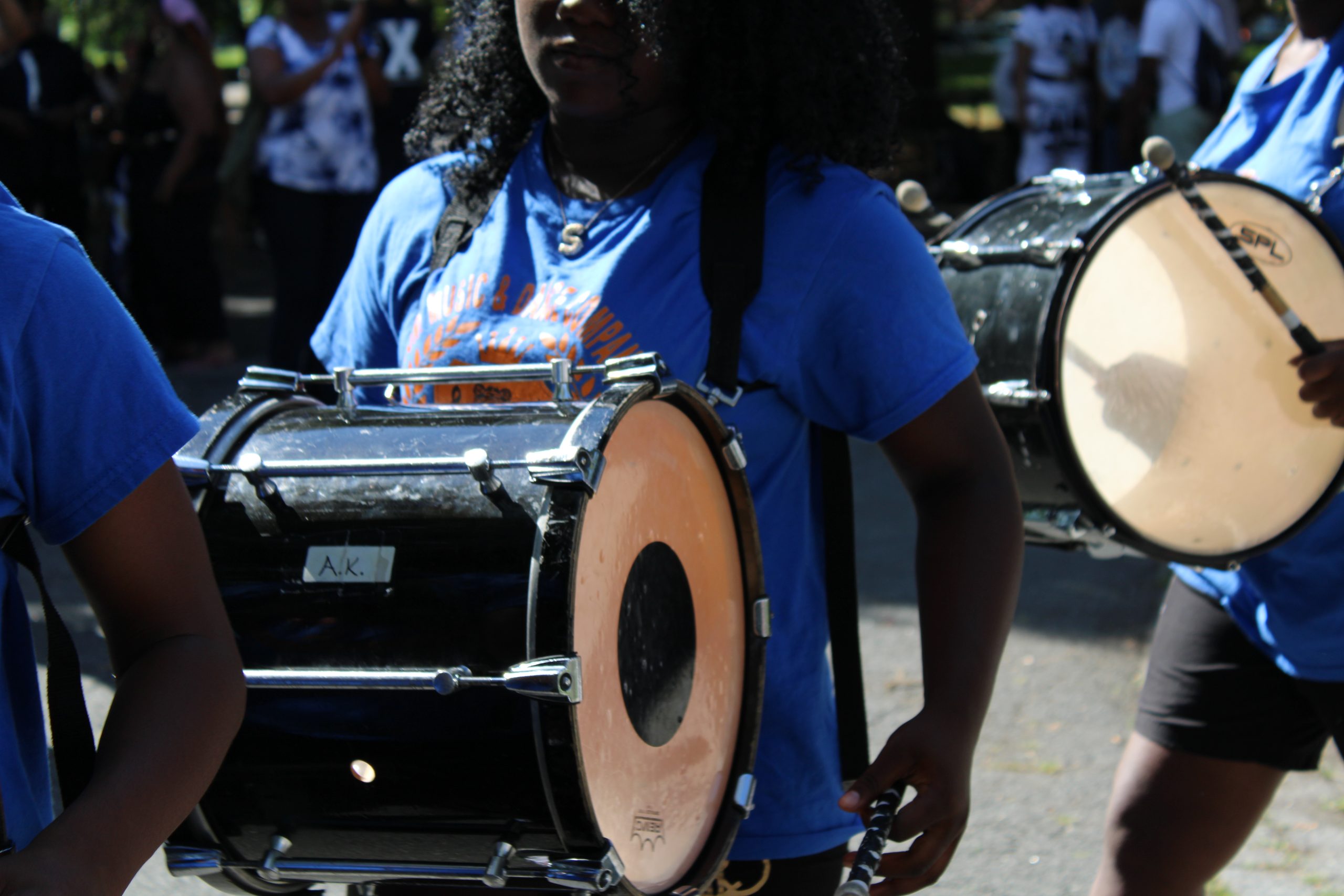
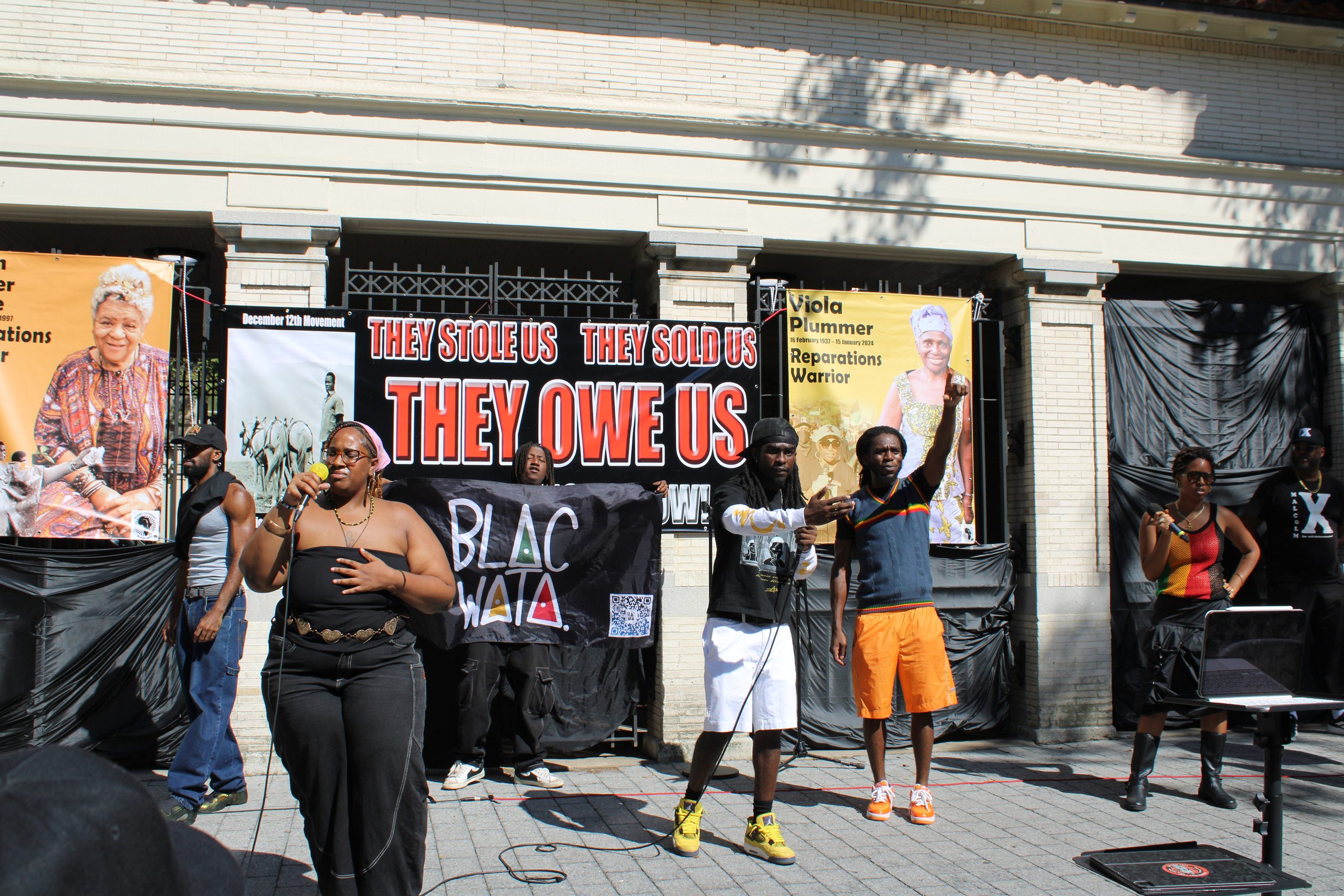
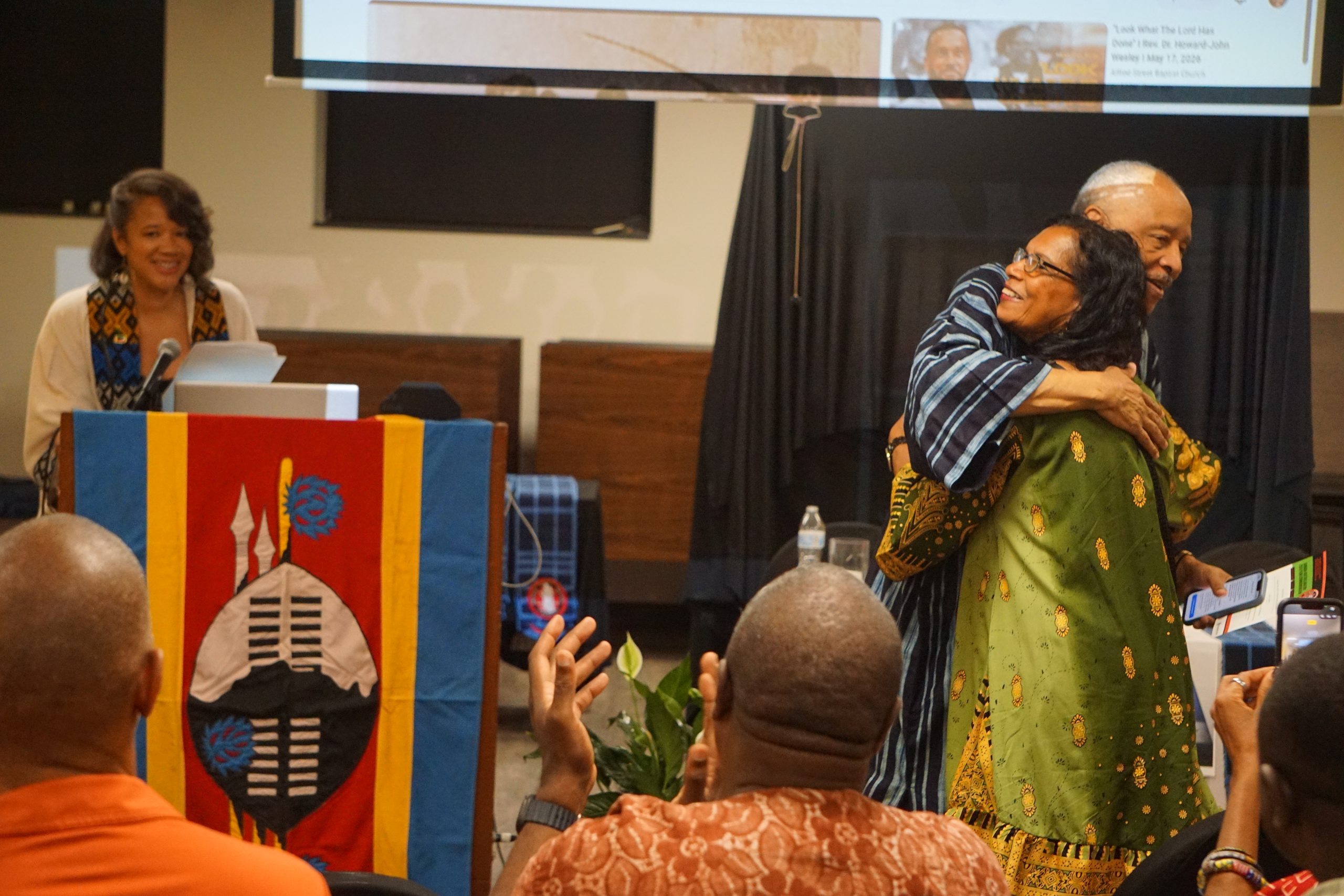
On Saturday, August 29, 2026, hundreds of people, from grade school children to senior citizens, attended the Reparations Rally in the Bedford-Stuyvesant neighborhood of Brooklyn, NY, to commemorate the 25th Anniversary of Durban.
“Reparations Now!” could be heard throughout the city that Saturday. The high energy of this historical celebration was shared throughout New York, in several other U.S. cities, and internationally. National reparations rallies were held in Kansas City, MO, Detroit, MI, Chicago, IL, Washington DC, Maryland, Virginia, Greenville, SC, St. Louis, MO and overseas in London. Each rally location’s program featured an inspiring collection of performers, scholars and local leaders who expressed the magnitude of the trafficking of enslaved Africans and how these crimes against humanity, combined with other forms of systemic violence currently, continue to impact Black communities.
We must ensure that the “gravest crimes against humanity” resolution becomes a foundational framework for national and international reparations struggles, and recognize that further progress in our demand for reparations will require sustained pressure on the states responsible for these crimes.
Endorsers
The following organizations signed on to endorse the August 29th: Day of Pan-African Solidarity & Reparations. Together we build the collective power needed to hold states accountable for the gravest crimes against humanity. Fill out the endorsement form below to sign your organization on.
of 76 organizations shown
- Academy for Diaspora Literacy Inc
- African People's Socialist Party
- African People's Solidarity Committee
- Agape Tabernacle World Outreach Ministries (NY)
- Al Santana Productions (NY)
- All African Peoples Revolutionary Party
- Balanta B'urassa History and Genealogy Society in America
- Bethesda African Cemetery Coalition
- Black Faculty and Staff @Brooklyn College (NY)
- Black Men Build (NY)
- Brooklyn College Black Solidarity Day Committee (NY)
- CIJKAD-International Joseph Ki-Zerbo Center for Africa and her Diaspora
- Communist Party USA- Brooklyn Club (NY)
- Deborah For Georgia LLC
- Double Love Experience Church (NY)
- Dream Keep Consulting (NY)
- First Repair
- Foundation DRECCA
- Fund for Reparations Now!!! (NY)
- Global Afrikan Congress
- Global Circle for Reparations and Healing
- Haitian Congress
- Hands Off Uhuru! Hands Off Africa! / Fightback Coalition
- Human Rights Defenders Collective (SPlutas)
- Imoyase Community Support Services
- International Decade for People of African Descent Coalition UK
- Justice Reform Committee of Brooklyn - NAACP (NY)
- Kansas City Reparations Coalition
- Kordofan Women's Organisation for Human Rights
- Law Office of Maynard M Henry, Sr.
- Little Sun People Incorporated (NY)
- Malcolm X Center For Self-Determination
- Malcolm X Commemoration Committee (NY)
- Malcolm X Grassroots Movement (MXGM)
- Maloca Internationale
- Medgar Evers Community Coalition (NY)
- N'COBRA - New England Chapter
- N'COBRA Health Commission (NY)
- Nat Turner Development Organization, INC
- National African American Reparations Commission (NY)
- National Coalition of Blacks for Reparations in America (N'COBRA)
- National Conference of Black Lawyers (NCBL)
- National Reparations Institute
- NCBL Colorado Chapter
- NCBL Michigan Chapter
- New Afrikan Black Panther Party (Iowa Branch)
- New Afrikan Diplomatic and Civil Service Corps
- New Afrikan Peoples Organization (NAPO)
- New York Civil Liberties Union (NYCLU)
- New Yorkers For Reparations (NY)
- NYC Road Runners MC (NY)
- Operation POWER (NY)
- Paying Reparations Now (NY)
- People's Organization for Progress (POP) (NY)
- Reparation Education Project
- Reparations NOW Denver!
- Reparations United
- Rev. Herbert and Rev. Karen Daughtry
- Rose from the Concrete (NY)
- Saving Our Families (NY)
- Social Equity Empowerment Network (SEEN NY) (NY)
- Social Justice Network (NY)
- The Black Is Back Coalition for Social Justice, Peace, and Reparations
- The Black Lady Theatre (NY)
- The December 12th Movement (NY)
- The Drammeh Institute Incorporated and Center (NY)
- The Ethiopian World Federation Incorporated (NY)
- The National Black United Front (NBUF)
- The Palaver Collective (NY)
- The People's Coalition to Stop Deed Theft (NY)
- The Sankofa Cinema Club (NY)
- Touch To Heal Initiative
- Ubuntu Institute for Community Development
- Universal Negro Improvement Association (UNIA) (NY)
- Why We Can't Wait Reparations Network
- World African Diaspora Union
No organizations match “.” Try a different search.
Represent an organization that isn’t listed below?
EndorseRally Gallery
August 29th in Pictures


Background
The Politics of Reparations
Reparations is fundamentally a political demand from which everything else follows. In the final analysis, the debt owed to People of African Descent is the responsibility of the U.S. government. The debt owed is a collective, rather than an individual one. Reparations will only be won through an irresistible pressure brought by the organized masses of People of African Descent.
- Our platform is built on the foundation set by those People of African Descent — , , , , and more — whose work preceded our organization’s birth in 1987. But it also reflects the lessons we have learned from our own participation in this fight: it cannot be detached from the history and context of the political struggles of Black people and must resist attempts to water down Black people’s politics and the struggle for reparations.
- While an entire political history of reparations remains to be written, it is undeniable that reparations is rooted in the political traditions of Black Nationalism and the evolution of Pan-Africanism. This is evident from the earliest documentation.
Contextualizing Belinda Sutton
The first documented case of reparations being demanded and awarded comes from , later Sutton, who had been enslaved by one of the largest enslavers in the colonies, Isaac Royall Jr. More is continually being learned about , and one should read her petition in its entirety. In it, she makes the case for how her previous life was stolen from her, recounts the horrors she endured, and describes the wealth that was built from her exploitation, for which she demanded compensation.
While one might speculate about Sutton’s politics — given that, at the age of seventy, she could neither read nor write — the petition itself, dictated to the renowned abolitionist , reflects ideas associated with an emerging Black political consciousness. Hall is widely recognized as a forerunner of Black Nationalism through his advocacy of self-determination, Black institution-building, and racial solidarity. His politics encompassed both emigration efforts to Africa and the struggle for full citizenship in the United States. While American culture has often emphasized individualism, ’s claim for reparations cannot be separated from the broader Black Boston community in which she lived. Her demand spoke not only to her own circumstances but also to the reality of the approximately 300 people with whom she had been enslaved. Organization and community building is at the foundation of the earliest reparations case in the United States.
The Black Church, Emigration, and Reparations
The founding of the African Methodist Episcopal (AME) Church in Philadelphia in 1816 was another seminal moment, in which African people debated and articulated the essential issues of the day. Whether to leave or remain in the United States, free Blacks in the North considered two central questions: the struggle to end enslavement for those who remained in bondage and the unpaid debt owed to African people in the United States. They also debated whether emigration would mean abandoning those causes.
’s voyage to Africa and back in 1815 served as a catalyst for these discussions, even before the founding of the American Colonization Society two years later. Major debates among , , and throughout the 1850s further highlighted the questions of emigration and what America owed to the formerly enslaved. The Civil War and the participation of African people in it disrupted this discourse. Yet the discussion reemerged following the failure of Reconstruction and the unfulfilled promise of General Sherman’s Special Field Orders No. 15, which pledged forty acres of land to the formerly enslaved.
The collapse of Reconstruction ushered in the nadir of the 1890s, a period during which many African people remarked that racial violence, peonage, and convict leasing had become worse than slavery itself. This era also witnessed the re-emergence of the Black Church conventions (common before The Civil War) led by , who advocated both emigration and land acquisition and demanded government support for these efforts.
Twentieth-Century Reparations Mass Movements
can be credited with leading the earliest mass movement for reparations when she and others established the National Ex-Slave Mutual Relief, Bounty, and Pension Association in 1898. Although House is not often included among prominent Black Nationalists, this omission fails to see her politics and the consequences of them. By 1900, she had toured the country and organized approximately 300,000 formerly enslaved Africans to demand compensation for unpaid labor. The campaign for reparations in the form of pensions, combined with the organization of Black communities on a mass scale, was so effective that House was slandered in national newspapers and eventually imprisoned on fraud charges in an effort to derail the movement.
is the most significant advocate for reparations the world has known, yet her work cannot be understood outside the context of her Black Nationalist and Pan-African politics. Inspired by ’s UNIA movement in 1920, her influence spanned the remainder of the twentieth century, from her early activism through her final appearance at the Million Man March in 1995 and her transition in 1997.
In the early decades (1920–1950s) her politics was grounded in Black liberation movements, even during her membership in the Communist Party USA. During that period, she fought for the release of the Scottsboro Boys and helped organize Black Popular Front campaigns against fascism at home and abroad.
Her petitions to the United Nations in 1957 and 1959 transformed reparations into an international campaign and represent a pioneering effort that continues to shape how reparations should be understood today. Moore directly linked demands for reparations and land for Black people in the United States to broader decolonization struggles in Africa and exerted both direct and indirect influence on emerging generations of leaders. Among the most significant examples was her influence on the continued Pan-African development of . She was also a founding member of the Republic of New Afrika in 1968, whose leading figures included Chokwe Lumumba and Imari Obadele, founding members who later founded the National Coalition of Blacks for Reparations in America (N’COBRA).
Direct Ties to Durban
’s influence on reparations encompasses mass movement politics, Pan-Africanism, and internationalism. When argued that Black people’s demands should be framed as human rights claims and advanced in the international arena, he was building upon both Moore’s influence and a long-standing Black political tradition.
When the December 12th Movement and the National Black United Front began collaborating in the 1990s around the political imperative of holding the United States accountable for human rights violations and charges of genocide, they began laying the groundwork for the campaign leading to the 2001 World Conference Against Racism. Beginning in 1993, that effort sought to ensure that the world understood the fundamental nature of the oppression of Black people in the United States in relation to Black people throughout the African world and that these conditions were rooted in the foundational crimes of slavery, colonialism, and racial capitalism.
Reparations advocacy in the United States would be incomplete without this historical overview, which helps explain how generations of struggle have contributed to an understanding of the enslavement of African people and the Trans-Atlantic Slave Trade as the gravest crime against humanity and why reparations remains a necessary demand for justice.
Lessons From the Last 25 Years
In the last 25 years reparations has become more popular than at any time in its much longer history. Part of this is credited with the victory of Durban, another part of this is a reaction to the upsurge of activism in the wake of George Floyd and the international embarrassment that the United States has experienced. With the creation of at least 50 local (municipal or state-wide) reparations commissions and task forces, and many more organizations, we must be clear that reparations must be a mass issue, fundamentally rooted in the larger Pan-African struggle.
Durban is clear that in the final analysis, African people in the U.S. must make a national demand on the federal government. The demand must recognize our historic and present day material reality in the face of a government that is hostile to African people and our demand for reparations.
Videos
Documentary and Discussions
Watch the Durban 400 documentary and related discussions on the UN Gravest Crime Declaration and the 25th anniversary of the DDPA press conference. These videos provide essential context for understanding the history and significance of Durban and the ongoing struggle for reparations. We encourage you to watch and share these resources to deepen your understanding of the issues at stake and to help build momentum for our collective action on August 29 and beyond.
FAQ
‘Durban’ refers to the Durban Declaration & Programme of Action (DDPA) enacted at the 2001 World Conference Against Racism in Durban, South Africa. The DDPA was pushed forward by the African diaspora at the NGO (grassroots) level including the ‘Durban 400’ alongside African and Caribbean nations. It represents one of the most significant Pan-African victories of the 21st century and we will continue to build on its legacy to advance our struggle for human rights and reparations.
The Durban Declaration is the first international declaration that the Trans-Atlantic Slave Trade and Slavery are crimes against humanity. Crimes against humanity have no statute of limitations and thus the DDPA destroyed any international legal barrier to African people suing the colonizing and settler-state countries which built their wealth on and owe their current power to stolen labor and resources.
The Durban Declaration went even further, stating that reparations are due to the descendants of the victims of these crimes. The U.S., along with Israel, walked out of the WCAR rather than recognize our right to reparations — but the DDPA was enacted nonetheless.
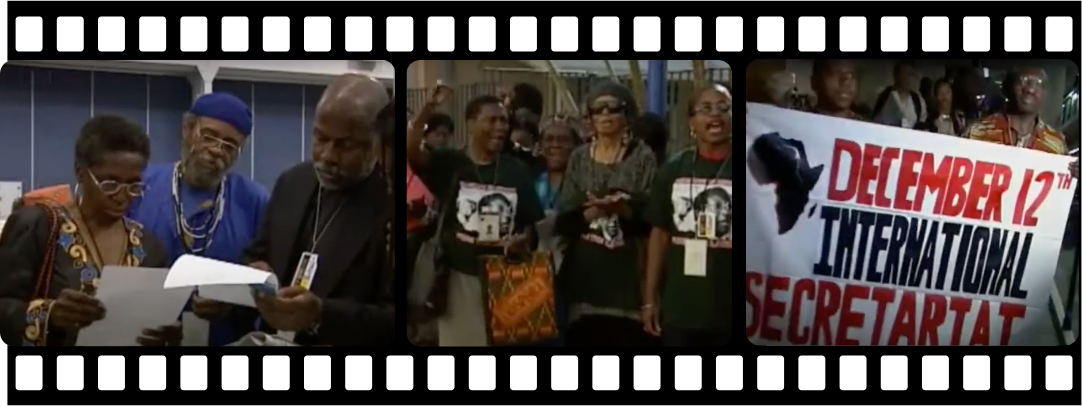
The DDPA came out of a hard fought battle between African people and the descendants of our former enslavers. The December 12th Movement, along with the National Black United Front (NBUF), organized 400 people (“The Durban 400”) to go to Durban to lobby for our reparations demand. The DDPA, a consensus document, was won through the leadership of a Pan-African collaboration between African and Caribbean countries and African people from throughout the Diaspora.
On March 25th, the African Union pushed resolution A/RES/80/250: Declaration of the Trafficking of Enslaved Africans and Racialized Chattel Enslavement of Africans as the Gravest Crime against Humanity, through the General Assembly of the United Nations. European countries abstained from the vote. Settler colonies Argentina, Israel and United States voted against the resolution.
Both historically and contemporaneously, the trafficking of enslaved Africans split the entire world into two forces – one representing humanity's resistance to oppression and the other advancing that oppression and exploitation. The distinction between those who profited from these crimes and those whose peoples and lands were carved up to generate profit is clear. It is the mechanisms by which these criminals will be held accountable that we must elucidate, with a laser-like focus on humanizing the conditions of African people throughout the world.
This year marks 25 years since Durban, and the recent passing of the ‘Gravest Crime Against Humanity’ resolution means the tides are swelling for the advance of Pan-African human rights struggle. We are building on our history to move forward, this year we launched the Campaign for August 29th, 2026: A Day for Pan-African Solidarity & Reparations, as a way to catalyze mass support for the reparations struggle. We will be rebuilding our unity across the diaspora to enforce accountability for crimes against humanity. Our struggle is one, until victory is won!
Contact Us
Get in Touch
Have a question about August 29th, want to coordinate a rally in your area, or need more information about endorsing? Send us a message and someone from our team will follow up.